
When to Use Polycarbonate Sheet | Lexan®| Acrylic | Plexiglass® | for Machining and Fabrication
Polycarbonate sheets (Lexan) or acrylic (Plexiglass®) can have a wide range of applications in both industrial and residential applications. This article is a guide to when to choose one over the other for a specific application in use.
If you can’t find the answer to your questions here, the Jaco engineering staff is available to provide the technical assistance you need to select the right clear plastic material, in addition to providing material sales, machining, and fabrication of clear plastic materials to meet your specific requirements.
Why and when to choose a polycarbonate sheet
Polycarbonate sheets or panels are thermoplastics that are UV-resistant, impact-resistant, and have excellent thermal stability, and are available in both clear and opaque sheets in a full range of colors. Due to the high-impact resistance, polycarbonate sheets are often found in security applications such as banks, fences, police riot shields/visors, and bulletproof windows
Lighter than glass or acrylic, polycarbonate sheets can often be found in construction applications for awnings and overhead covers. Their superior ultraviolet protection, thermal, and impact resistance result in a longer life than other construction materials. Tough, weather-resistant polycarbonate does not yellow, fade, or discolor as other polymers can over time.

As an exceptional thermal insulator, polycarbonates can be found in electronic equipment such as sensor components, switch relays, LCDs, connectors, computers, cell phones, instrument housings, panels, and cases. CDs and DVDs are also used for optical disks, similar to polycarbonate optical lenses for eyeglasses.
Widely used across the automotive industry, due to their lighter weight, strength, impact resistance, and dimensional stability, polycarbonates can be found throughout vehicles, from inner lenses to grills to headlights.
A common use of polycarbonate sheets is in agriculture, specifically greenhouse construction. Similar to glass, they can be used single pane, double, or triple for heat retention/insulation.
Polycarbonate sheets vs. acrylic sheets: which is better for your application?
When searching for a clear or transparent plastic, both acrylic and polycarbonate sheets come to mind. The question is, when to choose polycarbonate over acrylic?
First, let’s look at the key characteristics and a comparison of acrylic and polycarbonate:
- Acrylic is brittle, easy to chip
- Acrylic has a lower impact resistance than polycarbonates
- Acrylic has superior load-bearing properties
- Acrylic has superior scratch resistance to polycarbonate
- Acrylic will not yellow
- Acrylic can be restored to optical clarity by polishing.
- Polycarbonate is more expensive (roughly 2 to 3 times)
- Thicker gauges of polycarbonate can be bulletproof
- Polycarbonate is used in more industrial applications than acrylic
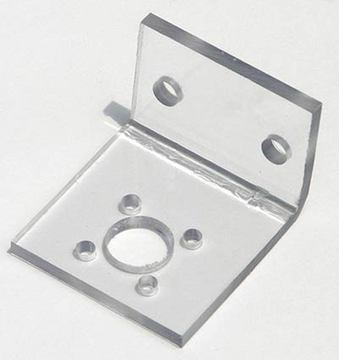
Where is acrylic used?
Similar to polycarbonate, acrylic is used for a wide range of consumer and industrial applications.
- Architecture and construction; doors, windows, luminaires, balcony guards, sound barriers, swimming pools, aquariums, terrariums, and large tunnels
- Furniture
- Automotive and transportation; RV components, windshields for motorcycles, helicopters, and marine applications.
- Retail and tradeshow displays; point of purchase displays, signage, and corporate imaging.
- Lighting; LED ceiling panels, sign lettering, lenses, covers, and shades
- Electronics; remote control transmitter window, electric guitars, rear projection screens
- Healthcare; neonatal incubators, surgical furniture, instrument panels, and lenses.
- Safety applications; riot gear and motorcycle helmets.
Polycarbonate sheets (Lexan®) or acrylic (Plexiglass®) Datasheet / Technical Information
Contact our experienced technical staff for the most up-to-date copy of a Polycarbonate sheet (Lexan®) or acrylic (Plexiglass®) datasheet. Our staff is available to help you specify the right materials for your clear plastic application and design the parts/components to meet your product requirements. Contact our technical staff today to discuss your acrylic or polycarbonate part design.
- Lexan® is a trademark of GE Plastics.
- Makrolon® is a trademark of Bayer.
- Plexiglas ® is a trademark of Rohm and Haas.