
Choosing between G10 vs nylon can significantly impact performance, durability, and cost in industrial applications. While both materials are widely used in manufacturing, selecting the wrong one can lead to premature wear, dimensional instability, or structural failure. Understanding their differences ensures you make the right investment for long-term reliability.
When comparing G10 vs nylon, it’s important to evaluate how each material performs under mechanical stress, environmental exposure, and friction. Both materials offer unique advantages, but they are designed for different types of applications.
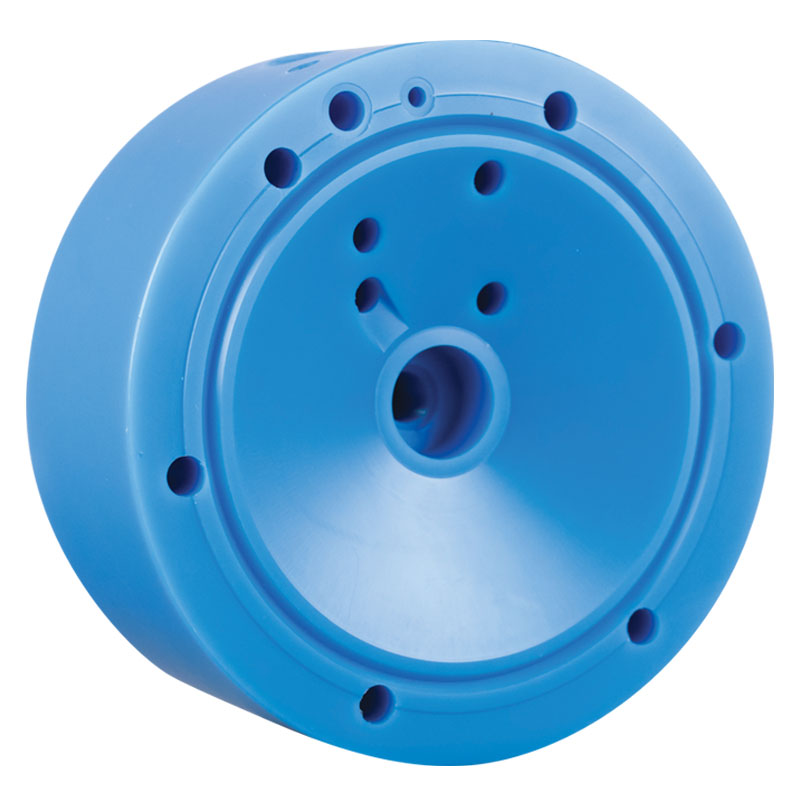
What Is G10?
G10 is a high-pressure laminate made by layering fiberglass cloth with epoxy resin and compressing it under heat. The result is a dense, rigid material with outstanding structural strength and low moisture absorption.
Key Benefits of G10:
- Very high mechanical strength
- Excellent dimensional stability
- Strong electrical insulation properties
- Minimal moisture absorption
- High chemical resistance
Because of these characteristics, G10 is often used in structural supports, electrical components, industrial panels, and high-performance mechanical applications.
What Is Nylon?
Nylon is a synthetic thermoplastic polymer widely used in manufacturing due to its durability and versatility. It is lighter than G10 and performs especially well in applications involving movement and friction.
Key Benefits of Nylon:
- Excellent wear resistance
- High impact strength
- Lightweight composition
- Self-lubricating properties
- Easy machinability
Nylon is commonly used for gears, bushings, rollers, spacers, and mechanical parts that require smooth motion and reduced friction.
G10 vs Nylon: Side-by-Side Comparison
To better understand the differences in the G10 vs. nylon debate, here is a direct comparison:
|
|||||||||||||||||||
|---|---|---|---|---|---|---|---|---|---|---|---|---|---|---|---|---|---|---|---|
Strength and Structural Performance
In the G10 vs nylon comparison, G10 clearly leads in rigidity and structural strength. It maintains shape under heavy loads and does not flex easily. Nylon, while strong, provides more flexibility and shock absorption.
If your application demands stiffness and minimal deflection, G10 is often the superior choice.
Moisture and Environmental Resistance
Moisture resistance is a major factor when choosing between G10 vs nylon. G10 absorbs very little water, which helps maintain dimensional stability in humid or wet environments. Nylon absorbs more moisture, which can lead to expansion and minor performance changes over time.
For outdoor or high-humidity environments, G10 offers better long-term stability.
Wear and Friction Applications
When friction and movement are involved, nylon typically performs better. Its natural lubricity makes it ideal for gears, rollers, and sliding components. G10 is more rigid and less suitable for continuous motion applications.
Cost Considerations
Cost is another important factor in the G10 vs nylon decision. Nylon is generally more affordable and easier to machine. G10’s higher price reflects its strength, rigidity, and advanced performance characteristics.
For budget-sensitive projects without extreme load requirements, nylon may be sufficient.
FAQs About G10 vs Nylon
Final Verdict: G10 vs Nylon
The choice between G10 vs nylon ultimately depends on your specific application requirements.
Choose G10 if you need maximum strength, rigidity, electrical insulation, and moisture resistance.
Choose nylon if your application requires flexibility, wear resistance, lightweight performance, and cost efficiency.
Understanding these differences ensures you select the right material for long-term reliability and performance