
What is CNC Milling?
When asking what is CNC milling: it is defined as a subtractive manufacturing process. It uses computer-controlled, rotating multi-point cutting tools to remove material from a stationary workpiece. By following a pre-programmed digital path, the machine produces specific shapes and features with high consistency. For specialized materials like glass-reinforced plastics and heavy-duty laminates, this process ensures the material’s structural integrity is maintained while achieving complex geometries.
What is the Difference Between CNC Milling and Turning?
Understanding what is the difference between CNC milling and turning is essential for cost-effective production.
- CNC Milling: The cutting tool rotates and moves across the material, which is held stationary. This is best for square, rectangular, or complex asymmetrical parts.
- CNC Turning: The workpiece rotates at high speed while a stationary tool removes material. This is the standard method for cylindrical parts like shafts and bushings.
In short, milling handles complex shapes and flat surfaces, while turning is reserved for round, symmetrical components.
How Accurate is CNC Milling?
Engineers often need to know, “how accurate is CNC milling,” to ensure parts fit in tight assemblies. Most industrial CNC mills reliably hold tolerances within ±0.001 to ±0.005 inches.
The accuracy of CNC Milling depends on three main factors:
- Material Stability: Plastics can expand or contract based on heat.
- Tooling: Sharp, high-quality bits reduce vibration.
- Workholding: Proper fixturing prevents the part from shifting during the cut.
Material Versatility: What Materials are Best for Milling?
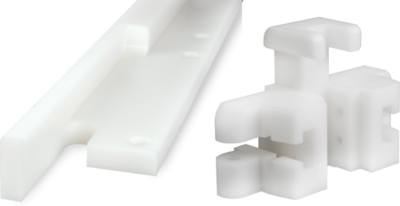
While CNC milling is compatible with metals, it is highly effective for high-pressure laminates and performance plastics. Materials such as G-10/FR-4, Phenolic, and Acetal are frequently milled because they hold their shape well during the subtractive process. Choosing a material with high dimensional stability ensures that the part remains within its specified tolerance after it is removed from the machine.
Axis Configurations: How Many Axes are Needed for Milling?
The complexity of your part determines the machine setup. In standard 3-axis milling, the tool moves along the X, Y, and Z planes. This is efficient for most flat or deep-pocketed parts. However, for highly intricate geometries or parts requiring machining on multiple sides without manual repositioning, 4-axis or 5-axis milling is used to improve precision and reduce labor time.
Quality of Result: What is the Result of CNC Milling?
Beyond dimensional accuracy, the physical result of CNC milling is a high-quality surface finish. Depending on the feed rate and tool choice, parts can achieve a “machine finish” that is smooth to the touch. For components used in electrical insulation or structural supports, this smooth finish is critical to prevent mechanical stress concentrations or to ensure a proper seal with mating parts.